Into Ice, Wind and Thin Air at 6000 Meters
The drive to Riobamba started out pretty tame, but things got wild fast once our little bus hit those first Andean curves. Packed with about twenty passengers, the driver tore through the Andes like there was no tomorrow—overtaking on blind curves, slamming the brakes, then accelerating again. It was a heart-pounding ride that had us on edge but somehow exhilarating at the same time. Sitting next to me was Mario, my travel buddy for the past few weeks after we’d bumped into each other by chance in Guatemala six weeks earlier. We ended up traveling together through all of Central America: rattling buses through Honduras, chaotic border crossings, jungle heat in Costa Rica, the slow magic of Panama. Weeks of shared discomfort and shared wonder that had forged the kind of easy trust you can’t really manufacture. When we finally boarded a flight from Panama City to Guayaquil, it felt like a natural continuation — the adventure simply changing its shape. And now here we were, at the base of one of South America’s most jaw-dropping peaks, still following whatever thread had connected us back in Guatemala.
We rolled into Riobamba and checked into our hotel, relieved to feel solid ground again. No time to unwind, though—we dove straight into planning our main goal: summiting Chimborazo, Ecuador’s highest peak at around 6,300 meters.
Flipping through the South America Handbook, we found Enrique, a local mountain guide. We called him, met him soon after, and he walked us through the route, gear needs, weather quirks, and the brutal reality of high altitude. As he spoke, excitement bubbled up in me. This was the real adventure I’d been craving.
The next day was all about gearing up. We moved through Riobamba picking up what we still needed: warm clothing, a thick sweater, gloves. Simple provisions too — bread, cheese, spreads. At the Monte Carlo Restaurant, we had them cook up rice with meat and fries, so we’d only need to reheat it later on the mountain. There was something almost funny about it — these ordinary errands suddenly felt charged with meaning when you knew exactly where you’d be standing in a few days.
That afternoon, we picked up the rest of the gear from Enrique: crampons, ice axes, heavy mountain boots, gaiters, ropes with carabiners, and thick sleeping bags. We practiced the most important knots, laughing as we fumbled through them — but beneath the laughter, tension simmered. That evening, we went out for a proper dinner and even caught a film at the cinema. A surreal contrast to what lay ahead.
The next morning, the alarm went off at seven. After a quick breakfast, the hotel owner personally drove us up to the first refuge at around 4,800 meters. The drive took barely half an hour — but the difference was staggering. Stepping out of the car, we were immediately surprised: it wasn’t nearly as cold as we’d expected. We made coffee and followed Enrique’s advice: wait two hours, let your body adjust to the altitude.
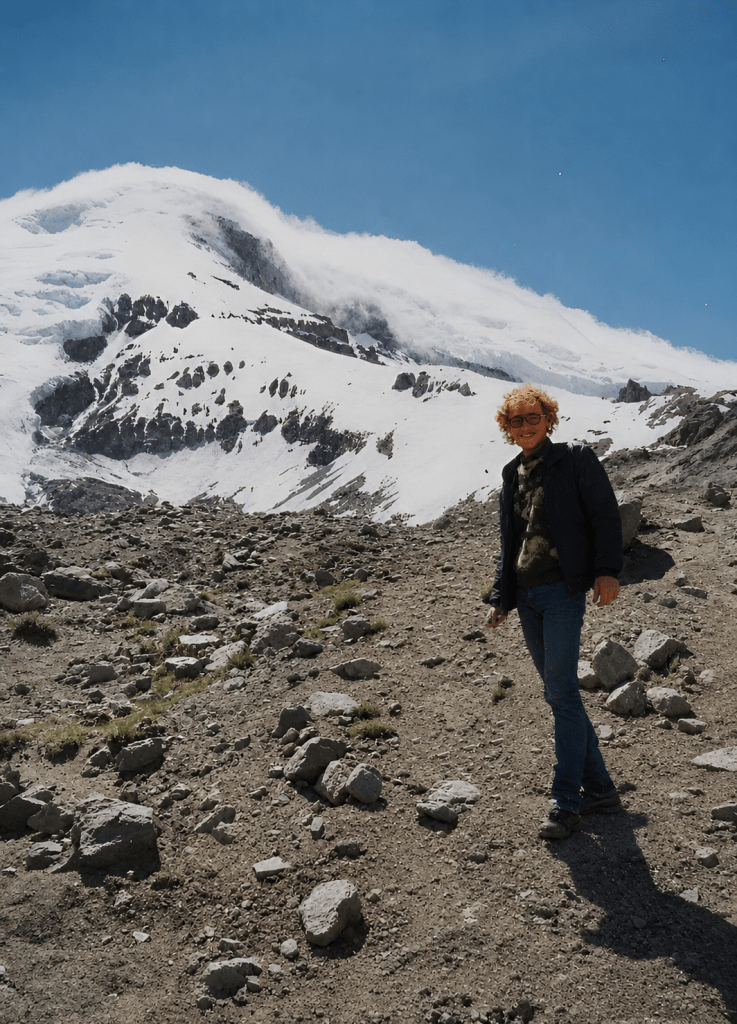
While we sat there, a German and an American arrived, also planning to make the climb. We fell into conversation, swapped expectations, and the time passed faster than we’d thought. Eventually, we set off together toward the second refuge — only about a kilometer away, but sitting 200 meters higher. What looked harmless on the map became a challenge almost immediately. The air was noticeably thinner, and every single step demanded something from you. After just a few meters, the body started forcing stops. Ten steps, halt, breathe deep. That short stretch ended up taking us a full hour, and I knew, this mountain wasn’t going to give anything away easily.
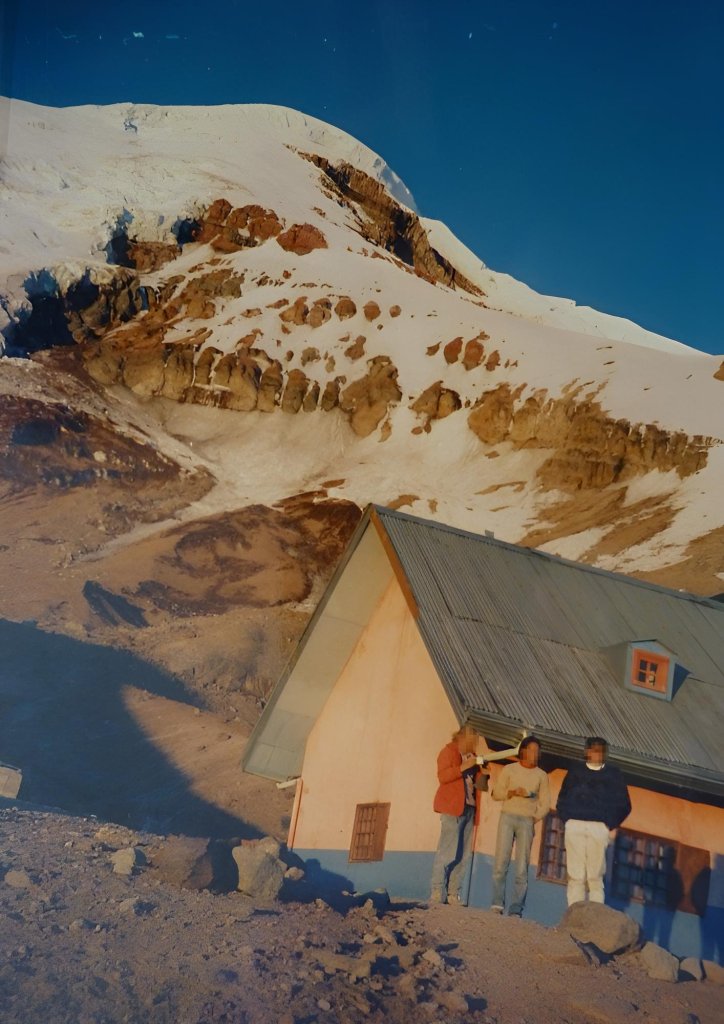
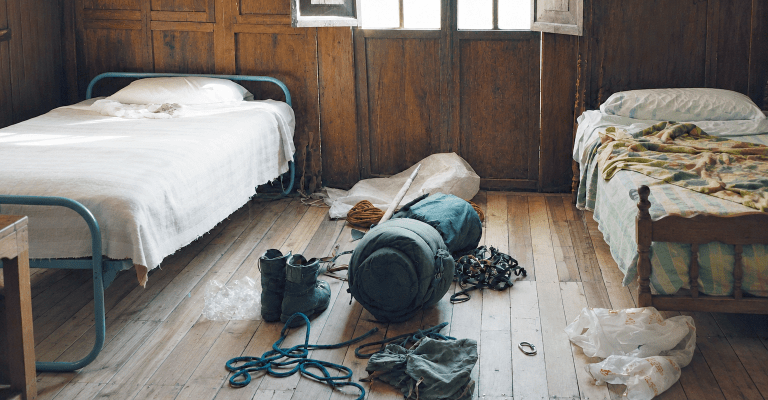
The second refuge sat at around 5,000 meters — a basic mountain hut in classic dormitory style. We settled in, got a fire going in the hearth, and cooked our food on the gas burner. A larger group of French tourists gradually filled the place — about fifteen of them, staying the night but not planning a summit attempt. The mood was lively, almost festive — and yet there was something else in the air too, something harder to name.
That evening, the mountains showed us their most beautiful side. Below us, the Andes stretched endlessly, valleys threaded with drifting cloud far beneath, the sun bathing everything in warm, almost otherworldly light. The sunset was spectacular — the kind of moment that carves itself into your memory and stays there.
At eight o’clock, we climbed into our sleeping bags — but sleep was barely an option. The air was thin and stifling, the body refusing to switch off. I kept waking up, gasping, turning over, searching for a rhythm that wouldn’t come.
At Midnight, the four of us got up.
Outside was a completely different world: strong wind, but a crystal-clear sky and an almost full moon. The silver light was more than enough to pick out the path — headlamps were barely necessary. It was bitterly cold, around minus five degrees, but the gusts made it feel even worse.
Bundled up tight, we started climbing. The lower section was loose scree and rock, but we made decent time at first—the effort kept us warm, rhythm kicking in. Altitude still bit, though: shallow breaths, frequent stops. The American turned back early—without proper gear, he knew it was futile.
We kept going.
And eventually reached the snow and ice line and strapped on our crampons. Up here, the cold intensified — driven mercilessly by the wind. Step by step we worked our way higher, slow and focused, interrupted again and again by short rests.
At around 5,500 meters, we crested the first ridge. The view in the moonlit night was breathtaking — an endless chain of mountains, still and overwhelming all at once. But we couldn’t linger.
Mario started having trouble. His feet were going numb, his boots no match for the cold. He made the decision to turn back. A sensible call — and a hard one.
From that point on, it was just Moritz and me.
The going got tougher, the wind fiercer. We kept ducking behind rocks just to catch a breath without taking the full force of the gale. But the higher we climbed, the more extreme the conditions became. At around 6,000 meters, we reached another crest — and there, the wind hit us with everything it had. Ice-cold, screaming up from the valley below, strong enough to throw me off balance. I drove the axe in and steadied myself, heart hammering, and stood there for a moment just trying to breathe.
And in that moment, with extraordinary clarity, I knew I had reached my limit. It wasn’t a dramatic decision. There was no internal argument, no back and forth. The mountain had simply made something visible that had perhaps been true for a while — the limit of what my body could sustain, the point where continuing would stop being an adventure and become something else entirely. The cold, the altitude, the exhaustion, the wind — none of them alone would have stopped me. But together, at that exact moment, on that exact ridge, they formed a wall I couldn’t see past.
I turned around.
Slowly, I made my way back down, step by step toward the refuge. The path felt longer than before — but after about two hours, I finally reached the hut. I pulled off my boots, crawled into my sleeping bag, and lay there in the dark, completely emptied out and finally fell into a shallow, restless sleep.
Morning felt like a different world. Tea and bread with cheese, the sun was shining, and suddenly everything felt a little less hostile.
Around eleven, Moritz came back. He said he’d reached the summit. Whether that was truly the case remained a mystery — but in that moment, it didn’t really matter.
Later that day, we packed up, made our way back down to the first refuge, and got picked up. By the afternoon, we were back in Riobamba, down at 2,700 meters, breathing normally again, back in a world of thick air and familiar warmth.
Looking back, I don’t think this story is about reaching the top.
It’s about that moment when the mountain draws a line—
and you realize exactly where yours is.

